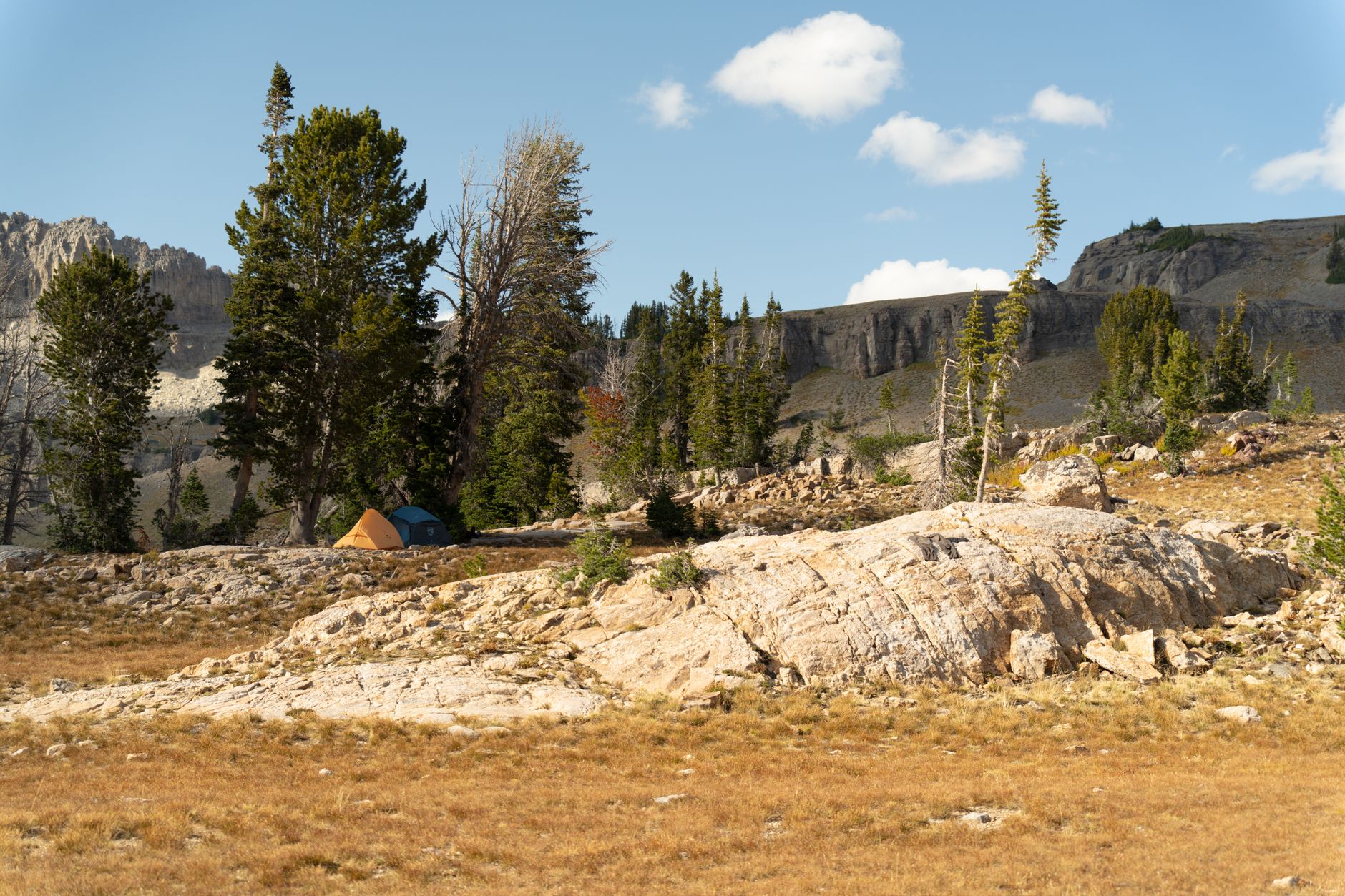
Pick your site before you're tired
Aim to stop hiking with at least 90 minutes of daylight left. Setting up in the dark is how tents get pitched on slopes and stakes go missing. Look for flat, durable ground at least 200 feet from water — that distance protects the water source and usually gets you out of the coldest, dampest air that pools right by a stream.
Scan up before you commit. Dead branches overhead ('widowmakers') are the single most avoidable backcountry hazard. Move 15 feet and pick a different spot rather than sleeping under one.
Set up in the same order every time
Build a routine so it becomes automatic when you're cold and tired: shelter first, then sleep system, then kitchen, then everything else. Inflate your pad and loft your bag early — a sleeping bag needs 20–30 minutes out of its stuff sack to trap air and reach full warmth.
Keep a headlamp in the same pocket every trip. Fumbling for light in the dark is the moment small problems become annoying ones.
Manage food like the wildlife is watching — because it is
Cook and eat at least 100 feet from where you sleep, and store all food, trash, and scented items (toothpaste counts) in a bear canister or hung bag well away from the tent. This is as much about mice as bears; rodents chew through packs for a granola crumb.
Never bring food into the tent, even 'just for the night.' The smell lingers in the fabric long after the snack is gone.
Stay warm before you're cold
Warmth is easier to keep than to recover. Put on your insulating layer the moment you stop moving, eat something with fat before bed to fuel overnight heat production, and go to sleep with a full-but-not-overfull stomach.
A wide-mouth bottle of hot water inside your bag near your core buys hours of comfort on a cold night — a trick worth the two minutes it takes to boil.
- ✓Stop with 90 minutes of daylight to spare.
- ✓Shelter → sleep system → kitchen, every time.
- ✓All scented items go in the canister, never the tent.
- ✓Layer up the second you stop moving.