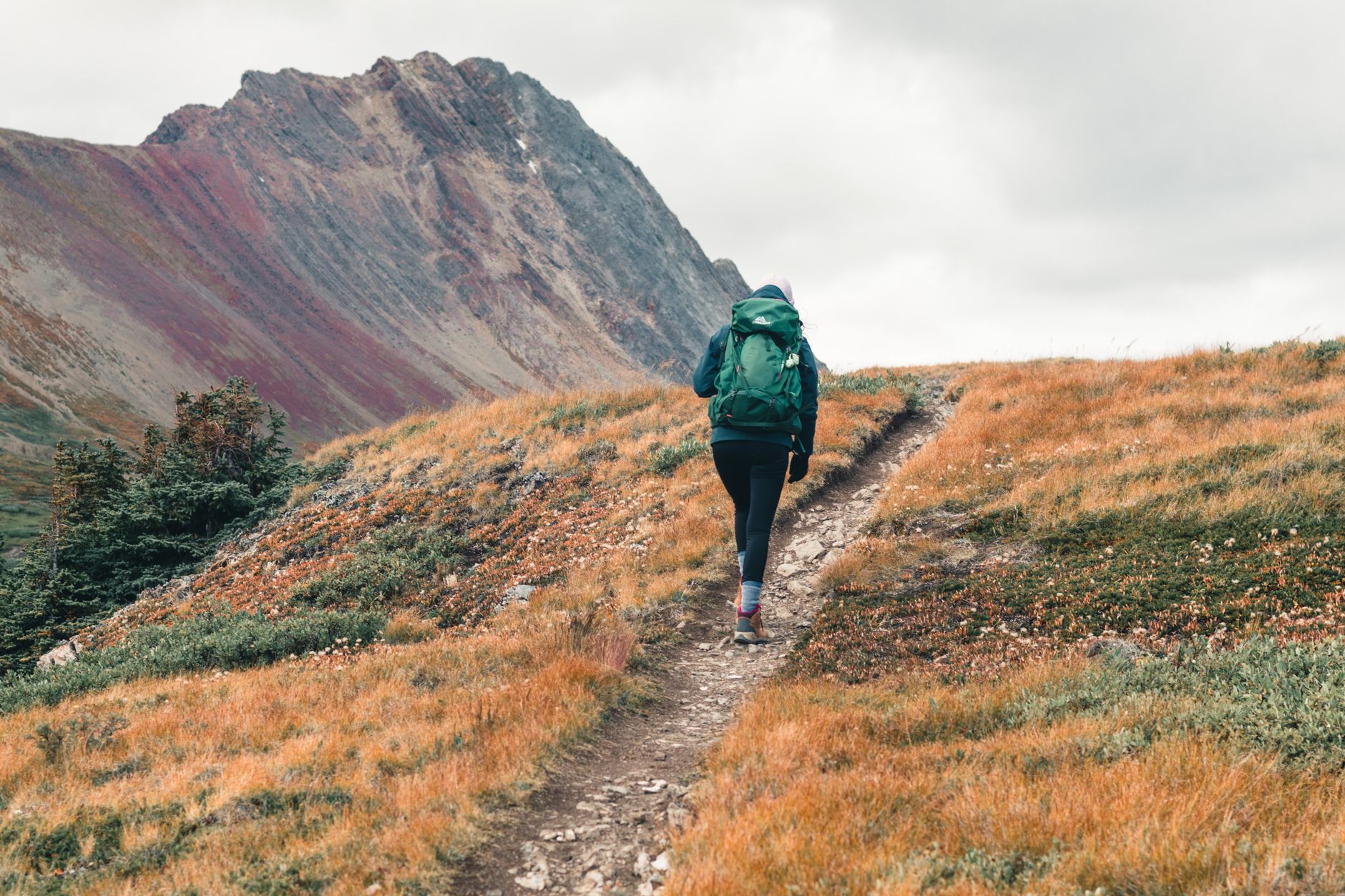
Think in three zones, bottom to top
Bottom zone: bulky, light, not-needed-until-camp gear — sleeping bag, sleep clothes. It forms a cushion and fills the space below the hipbelt.
Core zone (against your spine, at hip level): the heavy, dense items — food bag, stove fuel, water reservoir. Keeping heavy weight close to your back and centered over your hips lets your legs, not your shoulders, carry the load.
Top and lid zone: things you want fast — rain shell, first aid, snacks, map. If you have to dig, you'll skip using them.
Center it, then lock it down
Heavy items pushed away from your back create a lever that pulls you backward and forces you to hunch forward to compensate. Pull dense gear tight against the frame sheet.
Then compress. Cinch the side and top straps until nothing shifts when you rock the pack. A load that sways forces constant micro-corrections from your core and shoulders over thousands of steps.
Fit the pack to your hips, not your shoulders
Loosen everything, settle the hipbelt so its padding wraps the top of your hip bones (the iliac crest), and tighten it there first. Aim for roughly 80% of the weight on your hips.
Only then snug the shoulder straps and the load-lifter straps above them to about a 45-degree angle. Shoulder straps should stabilize the load, not hold it up.
- ✓Heavy + dense goes against your spine at hip height.
- ✓Compress until nothing shifts when you rock the pack.
- ✓~80% of the weight rides on your hips, not your shoulders.
- ✓Keep rain gear and snacks where you can reach them.