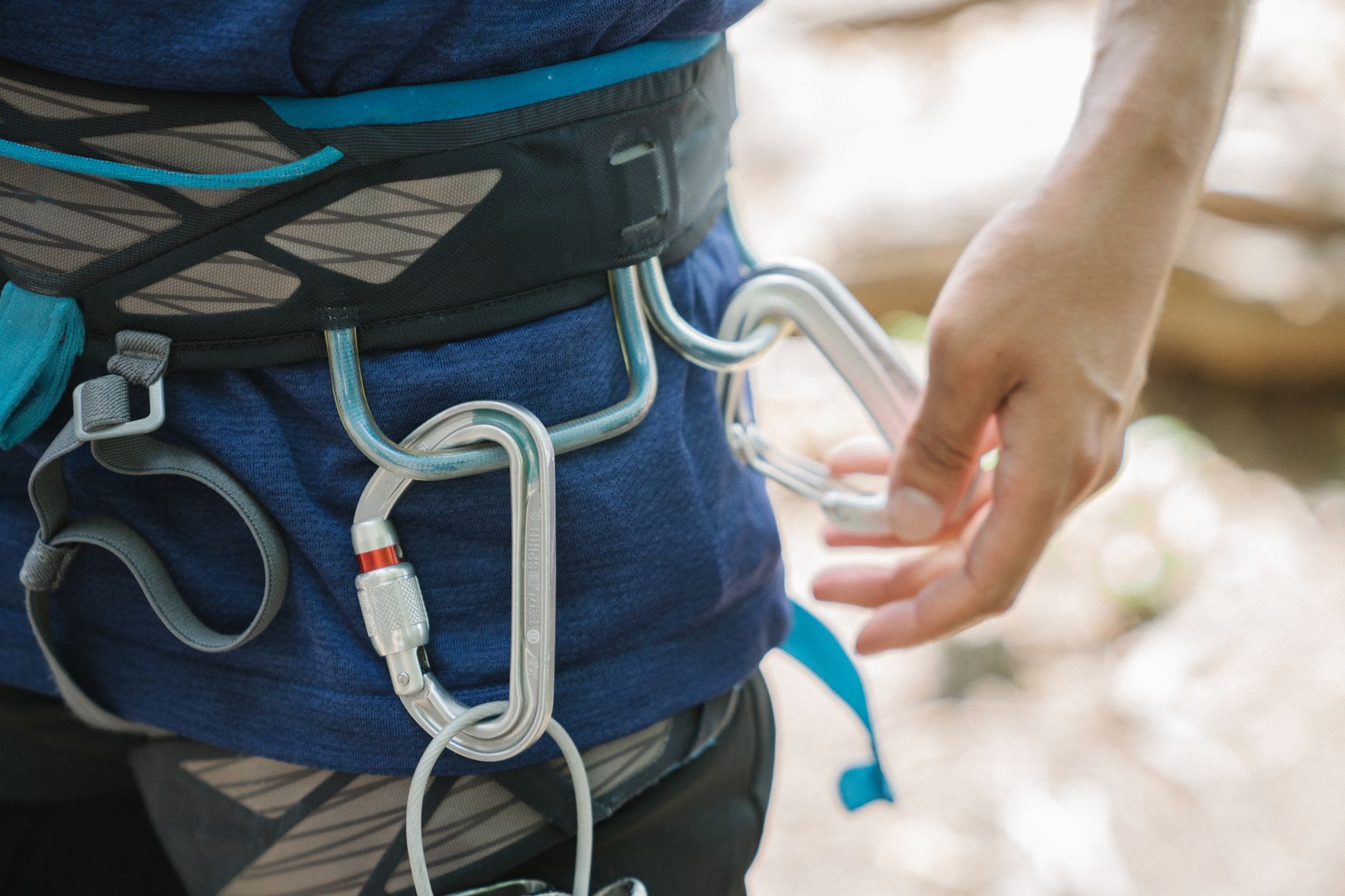
Grant's verdict: 9/10. Three numbers decide whether a carabiner holds, and the LiteWire stamps all three on its spine — 22 kN closed-gate, 7 kN open-gate, 8 kN minor-axis. Grant owns a rack of these and has not been climbing since 2023, but he will tell you the bottom line anyway: if those figures are not on the spine, it is a keychain, not a carabiner.
Who it's for
Buy this if: Anyone racking up for climbing, or building an alpine kit where gate freeze and weight both matter.
Skip this if: Anyone who just wants to hang a water bottle off a pack strap — buy an accessory clip and keep your rated gear on your harness.
In the field
What the kN numbers actually govern
A kilonewton is roughly 225 pounds of force. The 22 kN closed-gate figure applies only when the gate is shut and the load runs along the spine. Open the gate and the rating collapses to 7 kN; load it across the minor axis and it is 8 kN. That is not a defect, it is how every carabiner behaves — which is why the failure mode that matters is not the metal breaking but the biner being loaded in a direction its rating was never for.
Why wiregate rather than solid gate
A wiregate has far less mass in the moving part. Lower gate mass means less momentum during a whipping fall, so the gate is less prone to flutter open at the moment of loading — which is exactly when the 7 kN open-gate number would apply instead of 22. The open frame also gives ice fewer places to accumulate and lock the gate shut in winter conditions.
The unrated-clip problem
Hardware-store and accessory carabiners are typically stamped 'Not for climbing' and carry no kN marking at all. There is no standard governing them and no published breaking strength. The practical rule is the one the marking gives you: if the three kN figures are not on the spine, treat it as a keychain, regardless of how solid it feels in the hand.
Check the current price
Amazon See price →Links are Amazon affiliate links — we earn a commission if you buy, at no extra cost to you. It never changes our score.