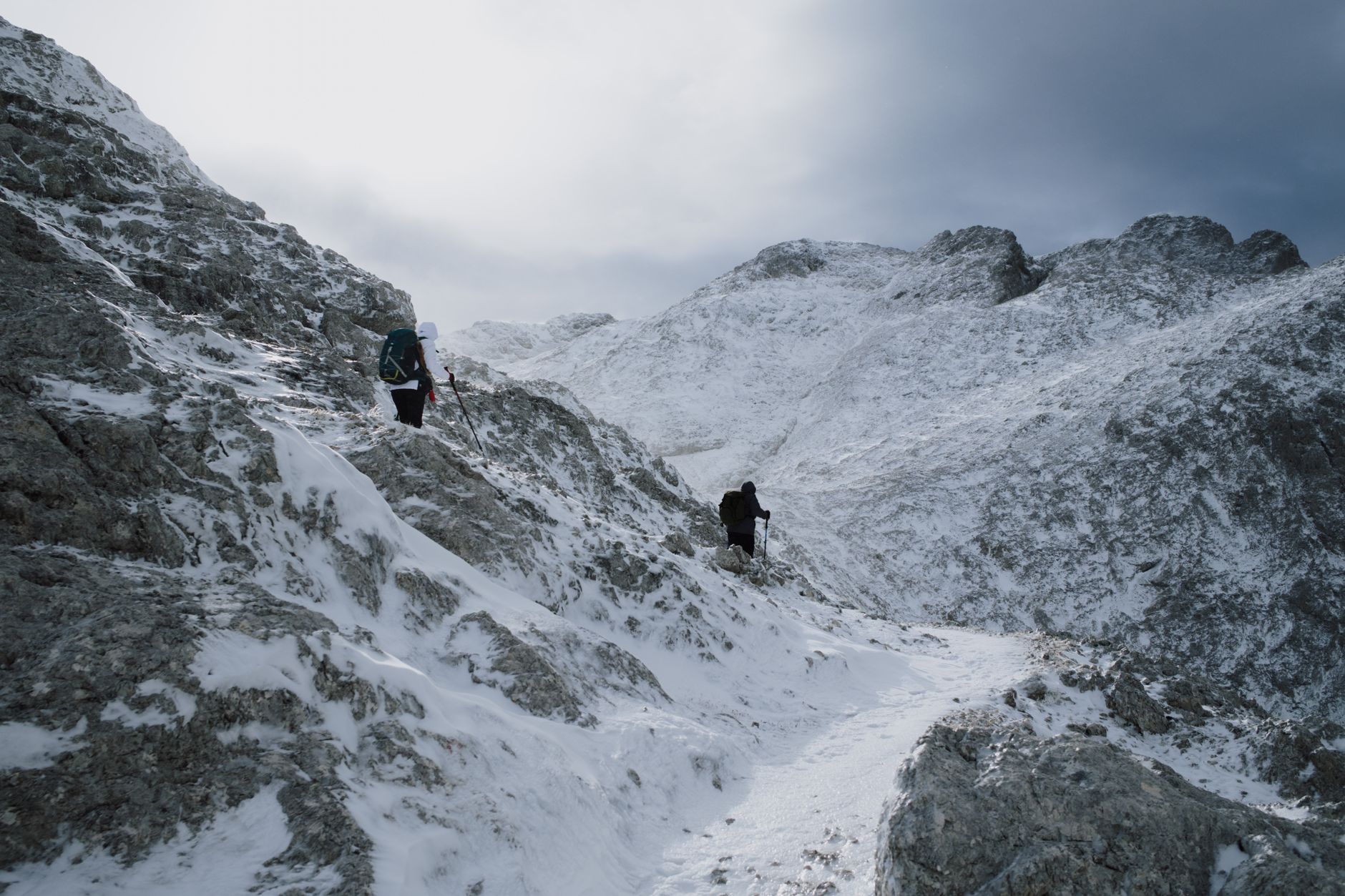
Grant’s verdict: Buy them if your winter miles climb, traverse or ice up. Skip them for flat, gentle walks. The traction and heel lift are built for steep, firm snow, and the price reflects it (OutdoorGearLab lists $400). The owner evidence is thin: we analyzed 57 owner comments across 4 YouTube reviews, published between 2013 and 2025, and only 3 of those comments named the Lightning Ascent directly.
Who it's for
Buy this if: Your winter hikes include real climbs, side-hills or wind-crusted snow, you carry a pack, and you want one pair that handles most terrain a recreational snowshoer will see.
Skip this if: You only walk flat, packed or groomed trails. On firm, icy paths with shallow snow, slip-on traction like Kahtoola MICROspikes or the Hillsound Trail Crampon is lighter and far cheaper.
In practice
What the traction is for
OutdoorGearLab’s spec table lists an aluminum frame with steel crampons, rails and teeth, a hinged binding and a heel lift. That combination is aimed at grip on firm, angled snow: the crampon bites under the ball of your foot, and the heel lift props your heel up on long climbs so your calves are not doing all the work. On deep, soft powder on the flat, the extra traction matters much less than surface area and size.
Pick the size by load, not by height
Load means you plus your pack and clothing. OutdoorGearLab lists up to 180 lb for the 22-inch, 120 to 220 lb for the 25-inch and 150 to 280 lb for the 30-inch. Cascade Designs, which owns MSR, lists the men’s 25-inch at 120 to 220 lb, rising to 280 lb with flotation tails, which are sold separately. One retailer lists the women’s 25-inch at 120 to 210 lb, so check the exact listing for the version you buy.
Snowshoes are not an ice plan
Snowshoes spread your weight over snow. They do nothing for the ice underneath it. Snow on a frozen pond insulates the ice and hides cracks, thin spots and open water, and a snowshoe gives you no warning before ice gives way. Treat every frozen lake or pond as off-route unless you have checked current local ice reports, and check trail and avalanche conditions before any winter outing.
What owners say, and how little there is
Of the 57 comments in this sample, 29 came from one review video, and only 3 named the Lightning Ascent directly, so we do not treat the sentiment as an owner consensus. Of the comments with a clear tone, 22 read positive and 4 negative. Price or value and durability each came up 4 times, and comfort or fit 3 times. Those are small numbers, so read them as themes to check, not verdicts.
Specifications
Sources: Cascade Designs (MSR) listing as quoted in retailer search results, and OutdoorGearLab’s spec table, checked 2026-11-16. MSR’s own product page did not load when we checked. Figures differ between sources; see notes.
| Sizes | 22, 25 and 30 inch |
|---|---|
| Dimensions (25 in) | 8 in wide x 25 in long |
| Weight (25 in, per pair) | 4 lb 5 oz (1.95 kg) on the manufacturer listing; 4.0 lb measured by OutdoorGearLab |
| Load range | 22 in: up to 180 lb; 25 in: 120 to 220 lb; 30 in: 150 to 280 lb (OutdoorGearLab) |
| Load with tails | 25 in: up to 280 lb with tails, sold separately (Cascade Designs) |
| Binding | Paragon binding, hinged to the deck |
| Traction | Steel crampons, rails and teeth |
| Frame and deck | Aluminum frame, TPU-coated nylon deck |
| Heel lift | Yes |
| Footwear range | 6M to 14M US for the unisex model; women’s 25 in listed at 6W to 12W |
Check the current price
Amazon See price →Links are Amazon affiliate links — we earn a commission if you buy, at no extra cost to you. It never changes our score.